
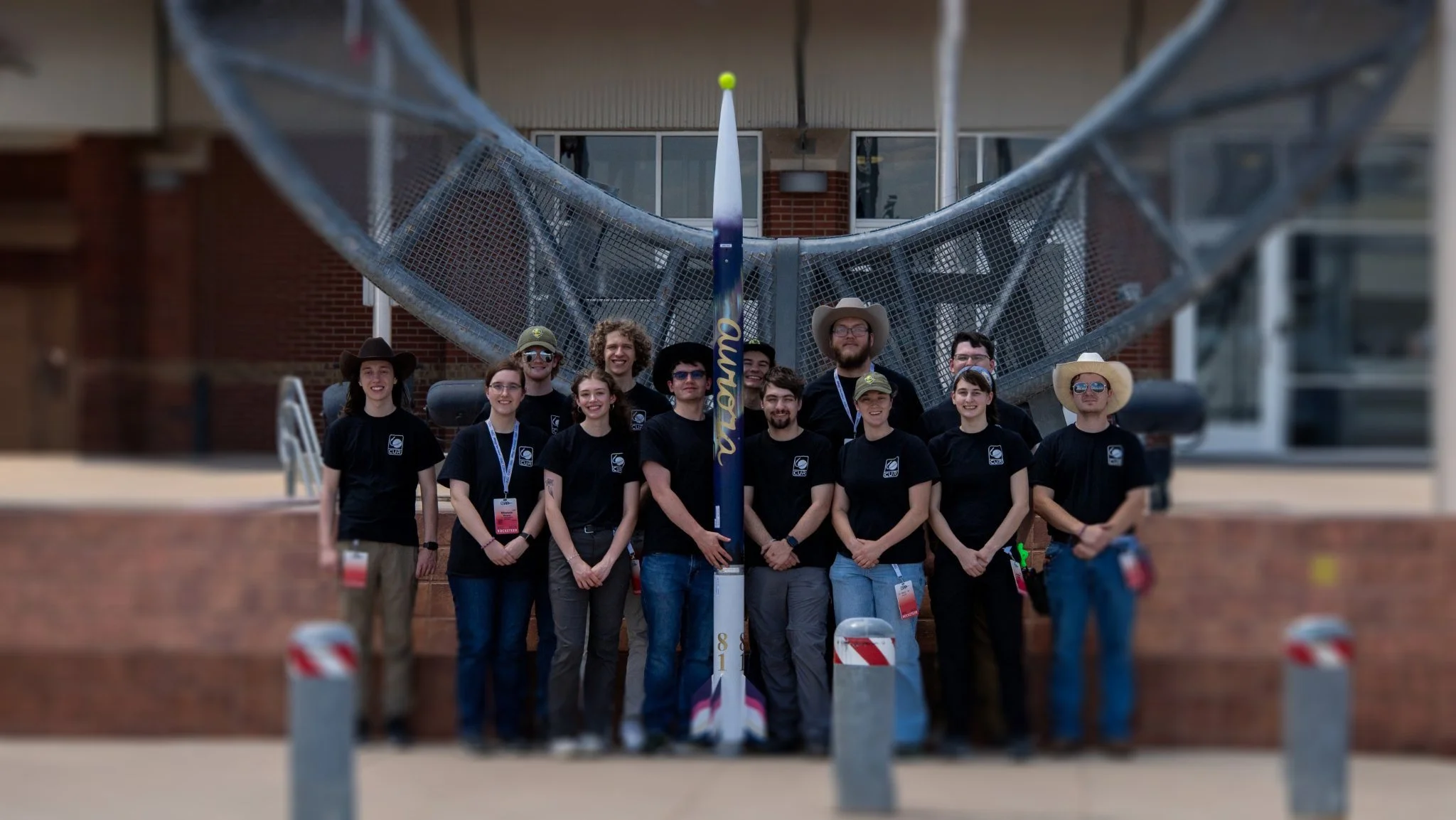
IREC 2026
June 2026 - Clarkson University Rocketry (CUR) returned to IREC for the third time in 2026, with our flight vehicle Aurora again competing in the 10,000-foot commercial off-the-shelf (COTS) category.
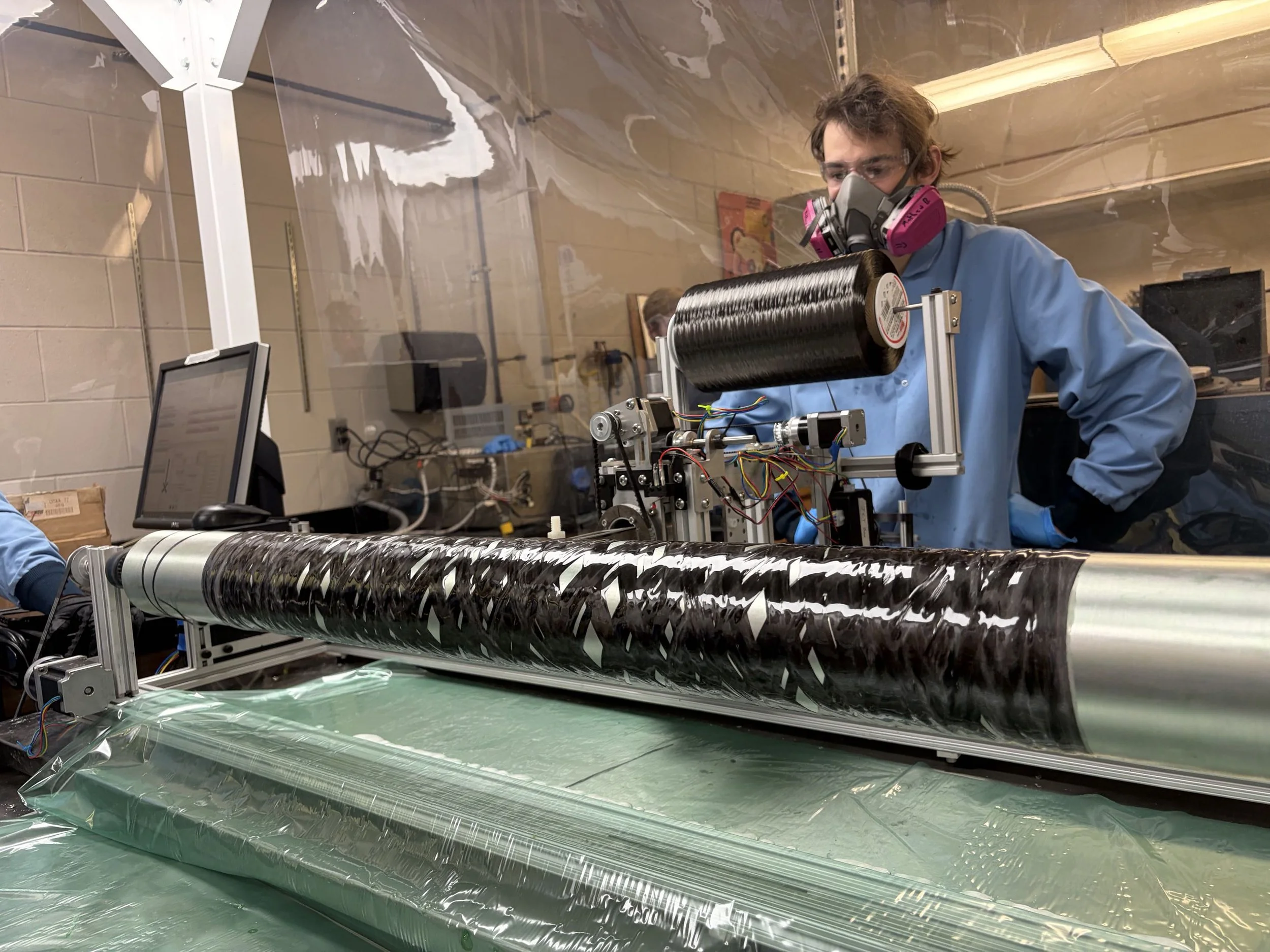
This year, our strategic focus shifted heavily toward advancing our Student-Researched and Developed (SRAD) electronics and refining our in-house manufacturing capabilities to establish a foundation for future campaigns. In support of these developments, Aurora’s airframe stood at 9 feet 7 inches tall with a 5.15 inch diameter and showcased the team's manufacturing capabilities, including carbon fiber wet-layup fins and centering rings, fiberglass wet-layup bulkheads, and custom aluminum couplers precision-machined entirely within our student machine shop. CUR thanks our Platinum Sponsors TANIQ and Alcoa for their support of Aurora’s structures and machining subteams, as well as our Gold Sponsor Kennametal for supplying tools for our in-house manufacturing.
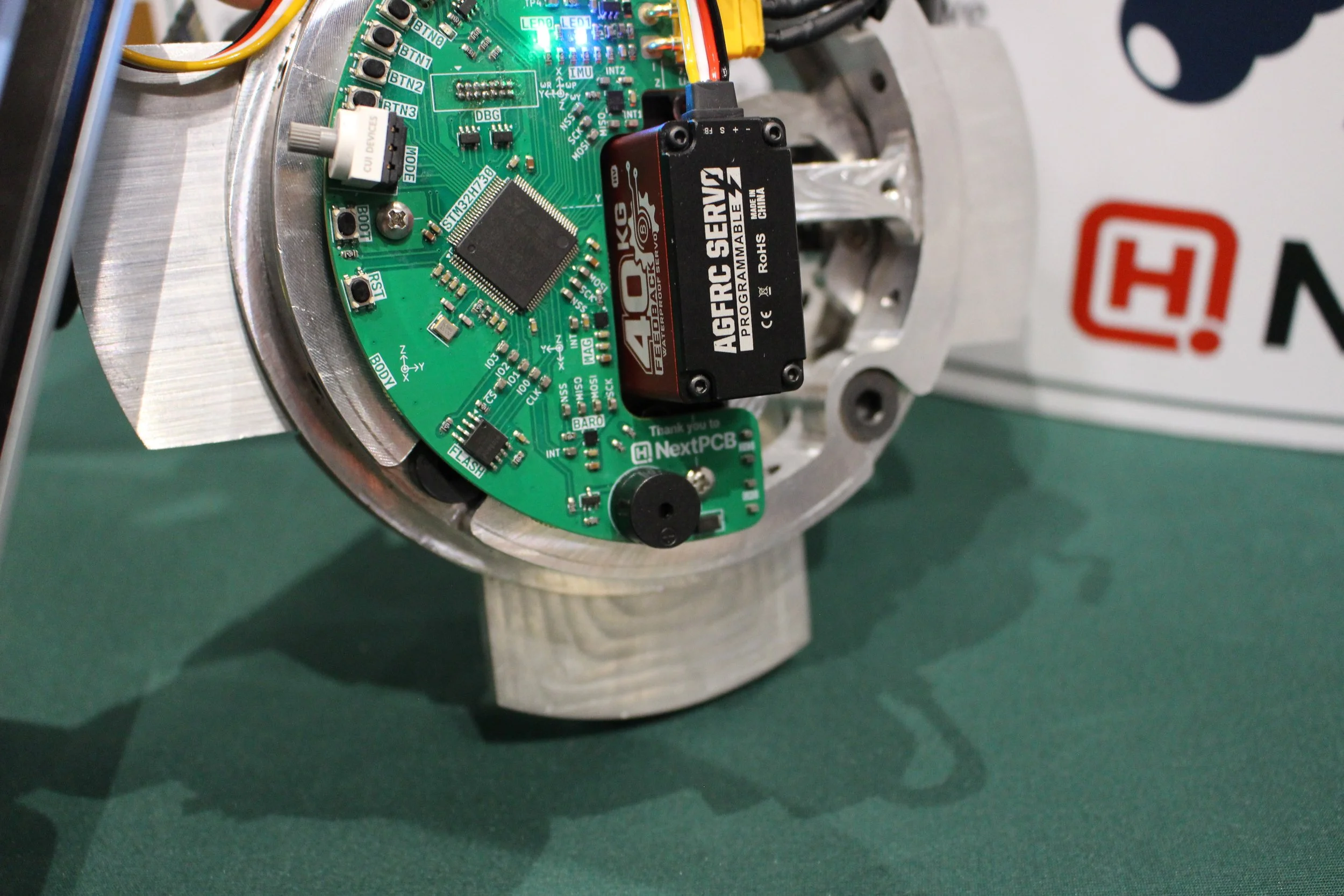
To upgrade our active controls, the team engineered a custom Air Brakes control system PCB that interfaces with our existing hardware, upgrading the onboard sensors, power switching, and processing system, thus resulting in a more reliable design. This new control system PCB is powered by an external battery thanks to our Green Sponsor URGENEX providing Li-ion battery packs, reducing the overall board footprint. In addition, thanks to Gold Sponsor NextPCB’s advanced PCB fabrication and assembly capabilities, this Air Brakes control system PCB was upgraded to a four-layer, single-sided board with a greater density than previous iterations, while NextPCB’s quick turn assembly supported CUR’s timelines for manufacturing, board bring-up, and testing of the Air Brakes system.
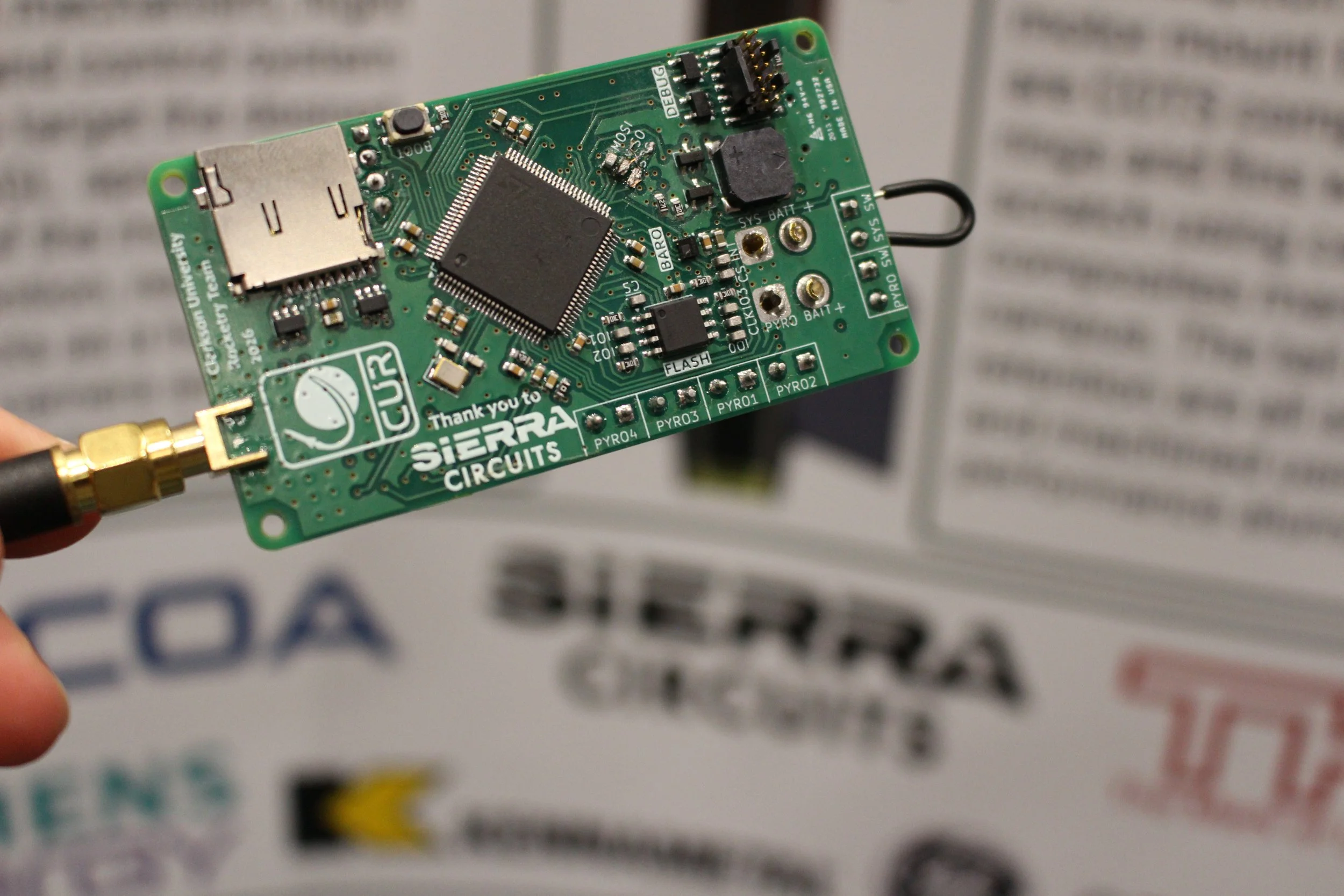
Concurrently, the avionics and recovery subteam team began development of our SRAD flight computer, laying the critical groundwork for custom avionics that will enable more complex flight profiles in coming years, and our flight computer boards were fabricated and assembled in the U.S. by our Gold Sponsor Sierra Circuits using their Turnkey PRO.
For the recovery system, the team experimented with a single-separation, dual-deploy configuration and nested the avionics bay directly into the nose cone to optimize the vehicle layout and weight distribution for stability.
Aurora was also designed to carry a scientific payload evaluating the effectiveness of various materials including carbon fiber, Kevlar, barium sulfate, and PEEK for shielding against high-altitude gamma radiation.
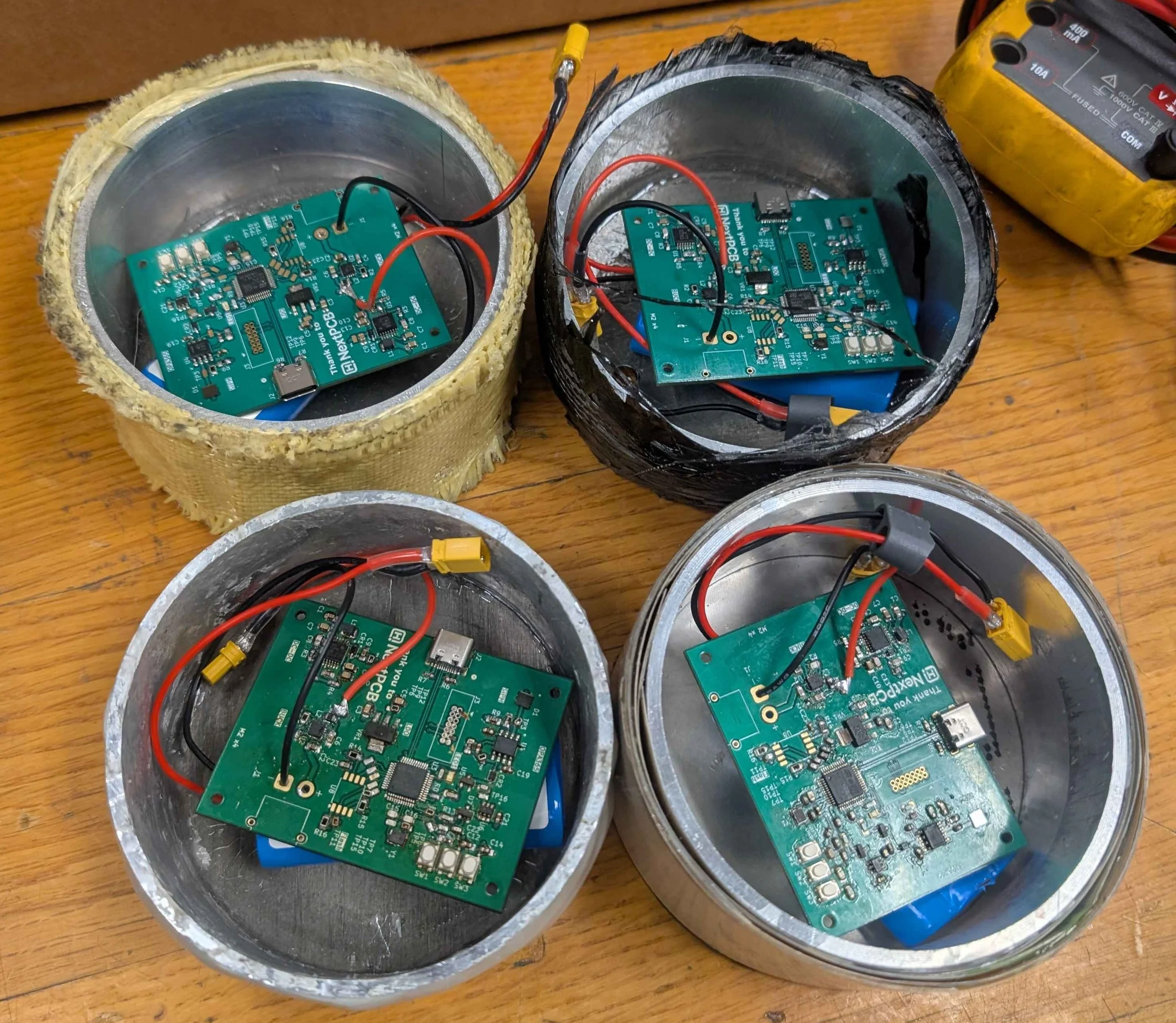
These experimental payload data collection electronics were implemented on custom PCBs made possible by Gold Sponsor NextPCB and were secured into machined aluminum containers stacked in a central tower configuration.
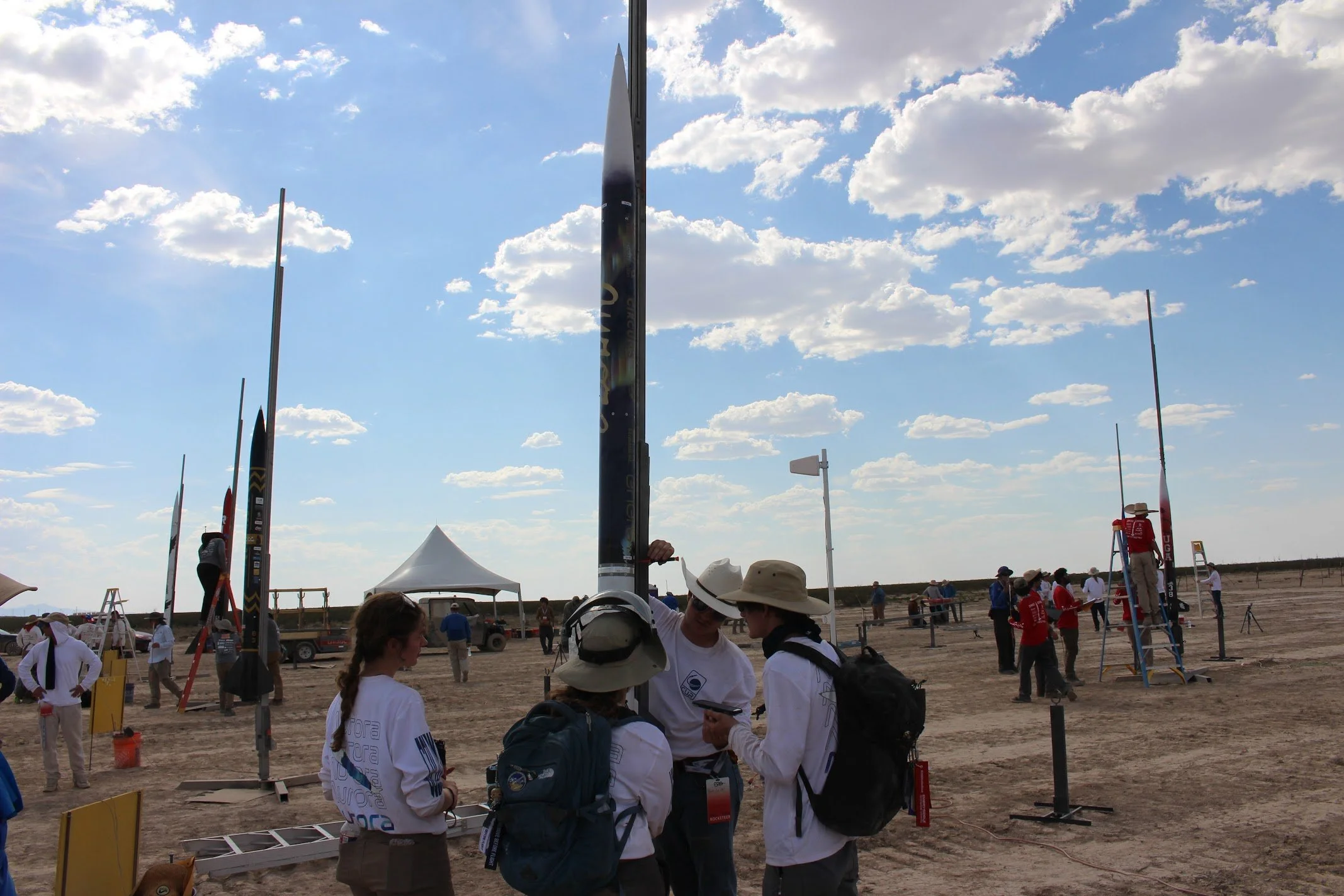
The team flew Aurora just before 7:00 PM on June 17, 2026 after preparing all systems and finishing integration of the rocket approximately 12 hours before. Just before launch, we suffered from telemetry connection issues, losing connection to the COTS flight computer during launch. The team observed a recovery event after apogee and noticed a section of the rocket drifting towards the horizon, while our live video system indicated that the booster separated from the rest of the rocket. As a result of this off-nominal recovery sequence, the team was unable to locate or recover any sections of the rocket, resulting in a disappointing placement of 133 out of 141 teams participating in the 2026 IREC. The team has identified the primary flight computer and recovery system complexity as flight failure modes and initiated a GPS tracker R&D project allowing for multiple sections of the rocket to be located even if unintentionally separated.